
February 2026
by Jermaine Galloway
Vape devices have evolved into highly customizable, low-cost products delivering unprecedented nicotine doses, making addiction easier, harder to detect, and more common especially among youth.
High in Plain Sight: What Today’s Vape Devices Are Really Delivering
Vape pens remain one of the fastest-evolving drug trends in the United States and worldwide. Their popularity especially, among youth continues to rise, including within school environments. While many people assume vapes contain only nicotine, what we are increasingly seeing is far more complex: extremely high nicotine doses, thousands of inhalations per device, and prices low enough to make them attractive & accessible to young users.
This article focuses specifically on vape pens and nicotine-related products. Vapes are also used to consume other drugs, that topic will be addressed below.
What Is a Vape?
There are no absolutes when it comes to vape devices. Vape pens may also be referred to as electronic nicotine devices, electronic nicotine delivery systems (ENDS), e-cigarettes, or “nic sticks.” Some are designed for traditional nicotine, flavored nicotine, nicotine-free liquids, or oils. Because of this variety, when someone is vaping, it is often impossible to know exactly what they are inhaling truly “High in Plain Sight.™”
Nicotine Isn’t What It Used to Be
Most vape pens do contain nicotine, but not the nicotine many people are familiar with. Many of today’s most popular devices use nicotine salts (nic salts) , a highly concentrated, lab-engineered form of nicotine that allows for stronger doses with less throat irritation.
The most concerning issue with nicotine salts is dosing. In 2019, vape pens typically contained 150–500 puffs. By 2020, devices with 1,200 puffs appeared. By 2024, the market had reached approximately 15,000 puffs per device. Today, some products advertise more than 75,000 and even up to 100,000 puffs. These numbers are expected to continue climbing.
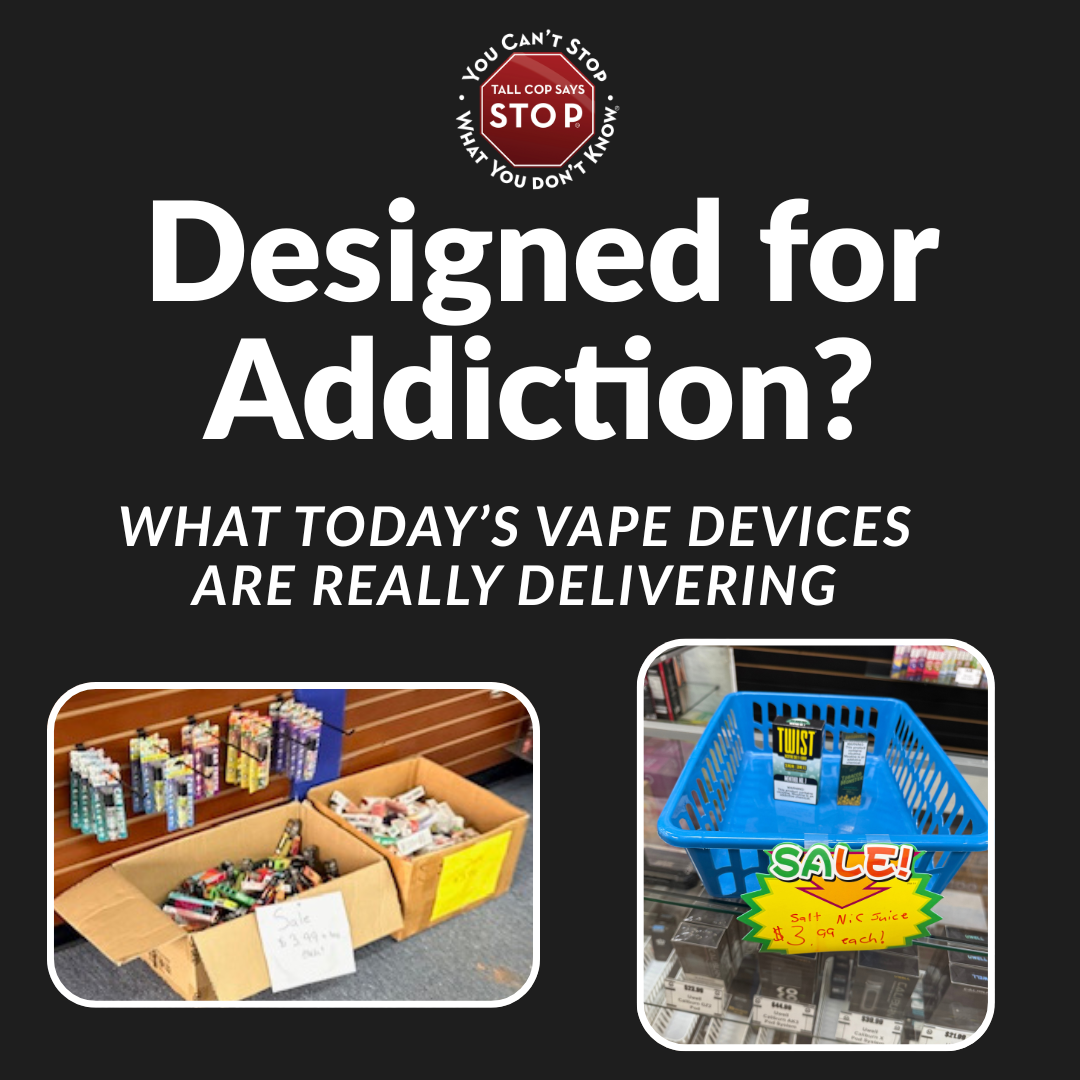
At the same time, prices have dropped dramatically. A vape priced at $50–$100 is unlikely to appeal to youth, but devices priced between $4 and $20 fall well within their reach. Increased dosing combined with lower prices creates a significant risk for addiction.
Customizable and Disposable
Many disposable vapes now allow users to customize their experience. With a button or switch, users can adjust flavor, nicotine strength, airflow, and hit intensity. This level of personalization makes these devices especially appealing and reinforces repeated use.
Beyond Nicotine
The vape market has expanded well beyond nicotine. Some devices marketed as diffusers resemble vapes and are sold alongside them, claiming to contain no nicotine. These products are often advertised as delivering herbal blends, essential oils, or incense. While they are popular among individuals attempting to quit vaping, it is difficult to verify the contents of every brand.
Cannabis vapes are also common and may contain CBD, delta-9 THC, or other forms of cannabis, including synthetic variants. While it is uncommon to find pre-packaged vapes that combine nicotine and cannabis, many devices allow users to switch between different cannabis strains, types, or flavors.
The Bigger Picture
Low prices, easy access, increasing nicotine strength, high puff counts, and appealing flavors continue to drive vape popularity. Until one or more of these factors is meaningfully addressed, it is reasonable to expect vaping and nicotine addiction to continue rising rather than decline.