
Written by Jermaine Galloway June 2026
If you have attended one of my in-person trainings over the last two years, listened to one of my podcasts, or followed recent drug trend reports, you have probably noticed a common theme: psychedelics are becoming one of the most talked-about drug categories in America.
As a national trainer, I have dramatically expanded my hallucinogen and psychedelic training content because we are encountering these substances more frequently than ever before, both in legitimate medical discussions and in illicit or unregulated markets.
Recently, while conducting a retail scan in the Midwest, I entered a store that advertised several cannabis-related products. What I found inside was a glimpse into a trend I am seeing more often across the country.
The store sold various mushroom products, including items labeled as "Amanita Blend," along with other psychoactive substances. What caught my attention most was the presence of DMT products.
The clerk showed me a plastic bottle containing a blue-purple liquid that looked more like fruit juice than a drug product. The label appeared homemade and lacked the ingredient disclosures, supplement facts, warnings, and manufacturing information commonly found on commercially packaged products.
Then the clerk casually stated, "I make this myself."
That statement immediately raised concerns.
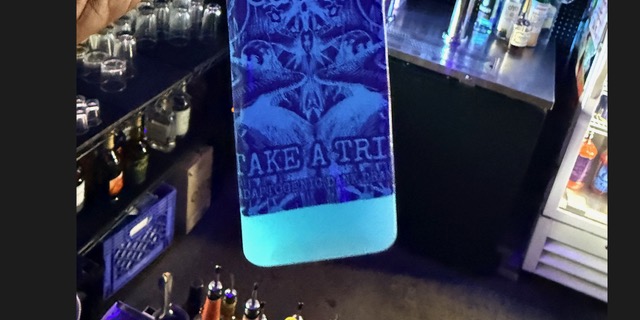
Without laboratory testing, there is no way to know exactly what is in a homemade product. Even if the person producing it is attempting to be honest, there are significant questions about potency, purity, contamination, dosing consistency, and the presence of unintended ingredients. As more individuals enter this homemade drug space, we must ask important questions: What is actually in these products? Could they contain undisclosed substances? Are consumers taking something far different than what they believe they purchased?
For those unfamiliar, DMT (Dimethyltryptamine) is a powerful psychedelic capable of producing intense visual and auditory hallucinations, altered perceptions of reality, and profound changes in consciousness. Sometimes referred to as the "spirit molecule," DMT occurs naturally in certain plants and animals but is also manufactured and distributed in various forms.
So why is this entire drug category receiving so much attention right now?
The Medical Side of the Conversation
One major reason is the growing interest in psychedelic-assisted therapies.
Federal agencies, universities, and medical researchers are conducting studies involving substances such as psilocybin, MDMA, LSD, ketamine, ibogaine, and other psychedelics. Researchers are examining whether these substances may have therapeutic value for conditions including depression, PTSD, substance use disorders, anxiety, and other mental health concerns.
The FDA has acknowledged the therapeutic promise of psychedelic drugs and has issued guidance to support clinical research. However, it is important to understand that most psychedelic treatments remain investigational. Researchers must still demonstrate safety and effectiveness through rigorous clinical trials before broad medical approval can occur.
As the FDA states, psychedelic drugs may hold promise for psychiatric and substance use disorders, but they remain subject to the same standards of scientific review required for any medication.
Researchers are also studying micro dosing, the practice of taking very small amounts of psychedelic substances below the level that would typically produce hallucinations. Some individuals report improvements in mood, focus, creativity, and emotional well-being. However, scientific evidence remains limited, and the FDA has not approved psychedelic microdosing as a medical treatment. Researchers continue to examine whether reported benefits are due to the substance itself, placebo effects, or other factors.
This distinction is critical.
When we talk about medical use, we are discussing supervised treatment in controlled settings under the care of trained medical professionals. We are not talking about self-medicating with gummies, vapes, mushroom candies, homemade products, or substances purchased online, in smoke shops, or from street-level sources.
Unfortunately, those two conversations often become blurred.
When Medical Interest Becomes Mainstream Interest
As media coverage of psychedelic research expands, public awareness grows. As public awareness grows, curiosity increases. And when curiosity increases, businesses and illicit sellers often move quickly to meet demand.
The result is what we are seeing today: increased availability of psychedelic products in smoke shops, convenience stores, online marketplaces, social media platforms, and illicit drug markets.
In many cases, these products are marketed as natural, therapeutic, legal, or safer alternatives to traditional drugs. Unfortunately, many consumers do not understand the differences between regulated medical research, unregulated commercial products, and illicit substances.
That confusion creates risk.
The Non-Medical Side of the Coin
While medical researchers continue their work, law enforcement agencies across the country are simultaneously reporting increased trafficking and distribution of psychedelic substances.
For years, we have focused heavily on marijuana, vaping products, fentanyl, methamphetamine, and cocaine. Those substances remain significant concerns. However, hallucinogens and psychedelics are increasingly appearing in seizures, investigations, schools, workplaces, and communities nationwide.
I have been telling audiences for several years that we are all going to need to understand psychedelics the same way we learned to understand marijuana and vaping. Schools, prevention specialists, healthcare providers, employers, parents, and law enforcement professionals should prepare for a growing presence of these substances.
This recent seizure that took place in Carrollton, Texas stands out because often when we see large seizures they involve fentanyl, meth or cocaine. Increasingly, however we are seeing hallucinogens and psychedelic substances appear in larger quantities and in more places than ever before.
I believe many schools will see significant increases in psychedelic-related incidents over the next several years.
The CDC also warns about the risks associated with poly substance use. Psychedelics are often used alongside alcohol, cannabis, stimulants, opioids, or other substances, creating additional health risks and increasing the likelihood of adverse reactions or medical emergencies.
Read More about this seizure HERE

Photo Courtesy of the Carrollton, Texas Police Department
Looking Ahead
Another question I frequently receive is whether there are age restrictions associated with purchasing these products.
The answer often depends on the specific product, its ingredients, and the laws of a particular state. In the store I visited, however, I did not get the impression that age verification was a major concern.
As psychedelic products continue to evolve, organizations will need to evolve as well. Schools, employers, healthcare providers, prevention professionals, and law enforcement agencies may need to update training programs, expand awareness efforts, review workplace and school policies, understand signs and symptoms of use, recognize adverse reactions, and evaluate whether current drug testing approaches remain adequate.
The bottom line is simple: Psychedelic drugs are no longer a niche topic.
The growing interest in therapeutic psychedelics has opened a much larger public conversation. While legitimate medical research may eventually lead to important treatment options, that same attention is also contributing to increased availability, commercialization, homemade products, and non-medical use.
As we continue navigating the evolving world of psilocybin mushrooms, ketamine, DMT, amanita products, inhalants, and other emerging substances, one thing is clear:
This is a drug category that every community should be paying attention to. These products are becoming increasingly accessible, widely available, and are showing up in places many people would never expect.